How AI Is Transforming Secure Media Workflows: XL8 at IBC 2026
Media companies today face three growing challenges: protecting unreleased content, managing ever-larger volumes of media assets, and simplifying increasingly complex production workflows. These priorities shaped many of the conversations we had during IBC 2026, where XL8 showcased MediaCAT On-Prem and our new AI-powered Ops Agent.
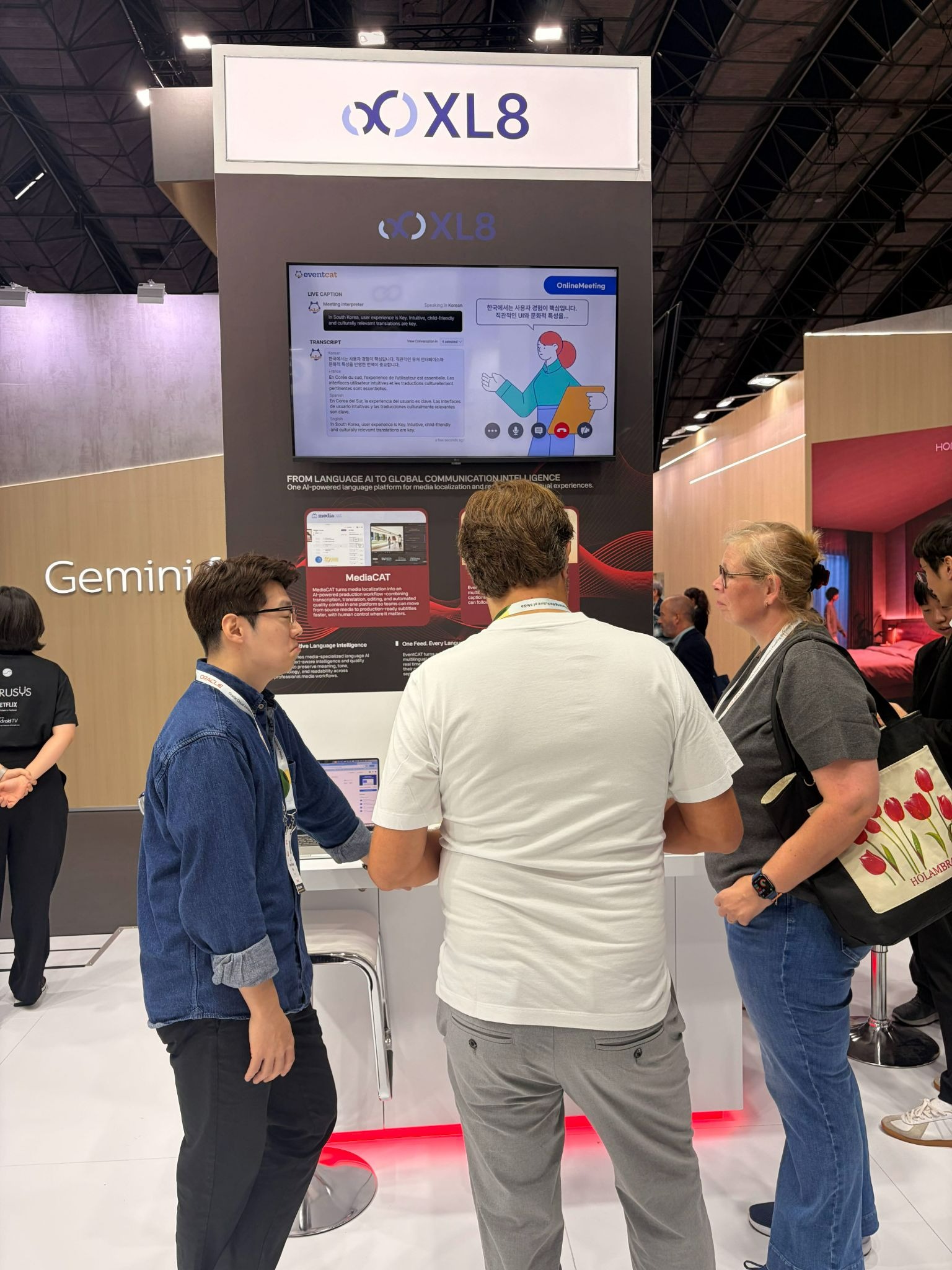
IBC 2026 gave us several days of something we don't get often enough: face-to-face time with customers who already know XL8 and our products. Between booth visits, catch-ups with existing customers, and live walkthroughs, conversations quickly moved past introductions and into the details of how media teams actually work today, where their workflows still create friction, and what they want AI to make easier next.
Those discussions also gave us a chance to show what we had been building and hear immediate reactions in return. This year, much of that attention centered on two areas: MediaCAT On-Prem, designed for secure workflows involving unreleased production content, and Ops Agent, our new approach to making complex platforms easier to navigate through natural-language interaction.

Why Media Workflows Are Changing
Media companies are under pressure to deliver more localized content across more platforms while maintaining strict security requirements. Production teams need to search massive libraries of footage faster, collaborate across global teams, and protect unreleased assets throughout the production process.
Increasingly, AI is expected not simply to automate tasks, but to fit naturally into existing media workflows without adding operational complexity.
Familiar faces made for better conversations
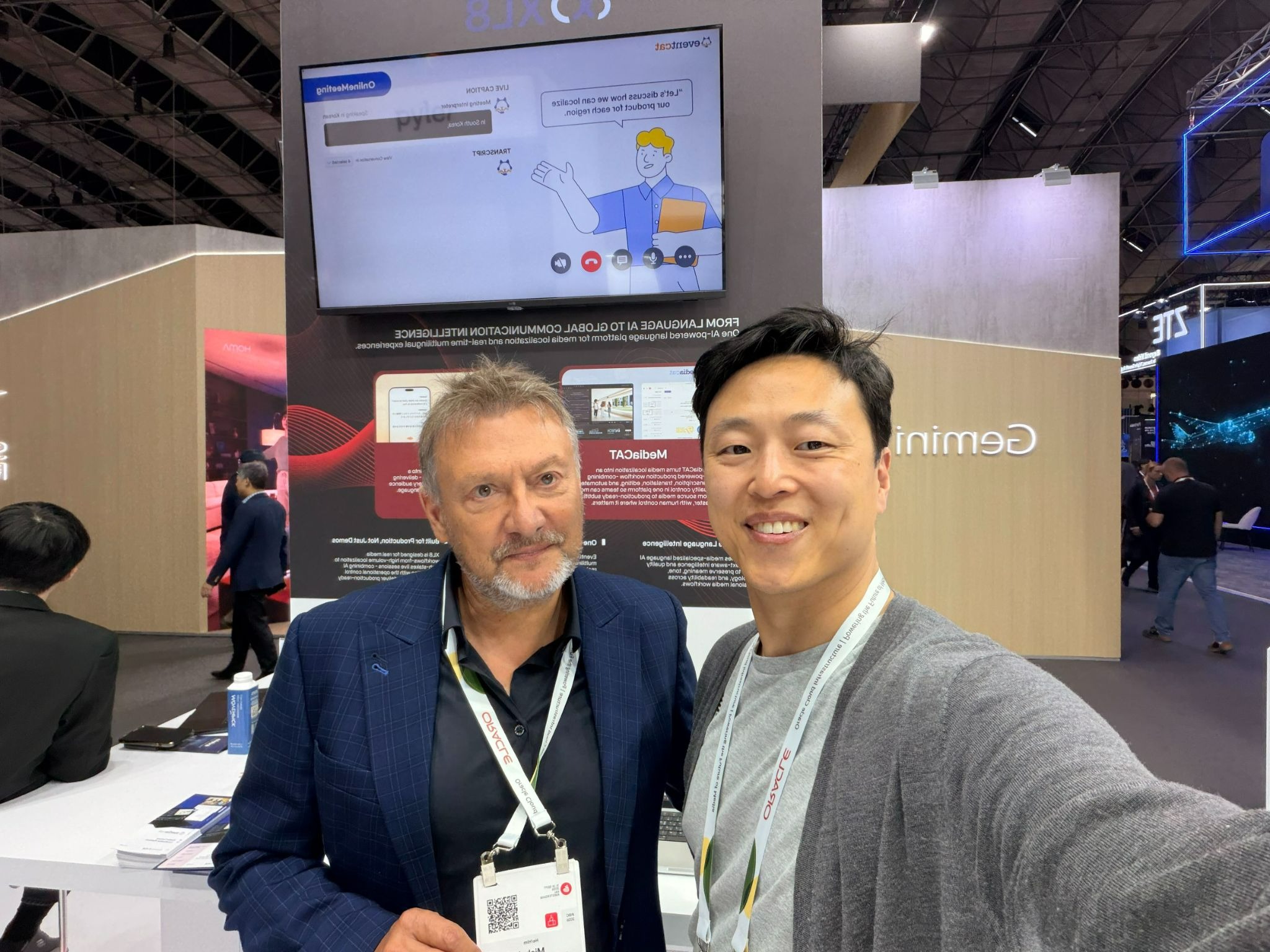
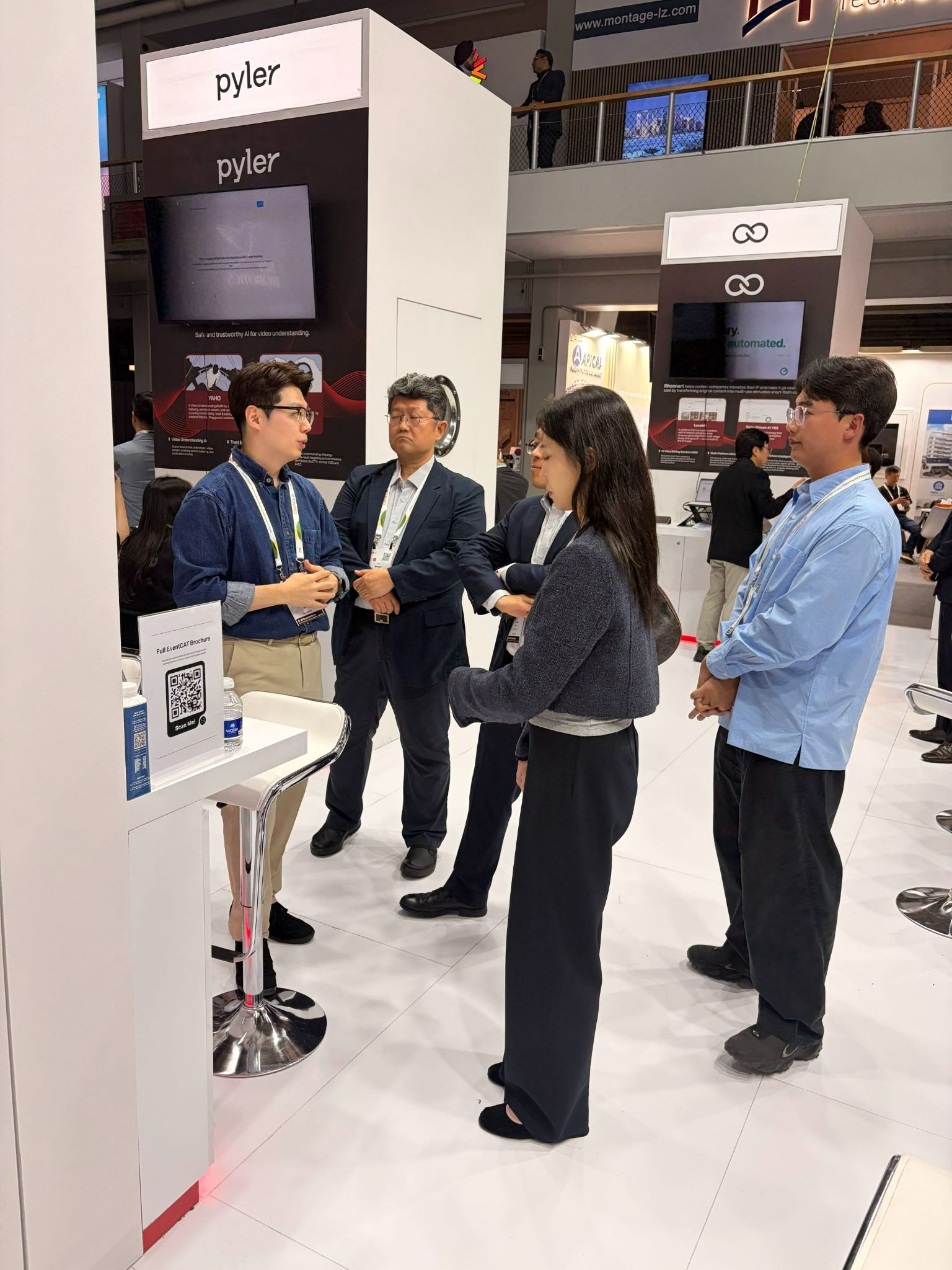
A large part of IBC for us was reconnecting with existing customers in person. Because many visitors already knew XL8, the conversation didn’t have to begin with what the company does or how the products work. We could move straight into what had changed since our last conversation, which workflows were becoming more complicated, and where they wanted better support.
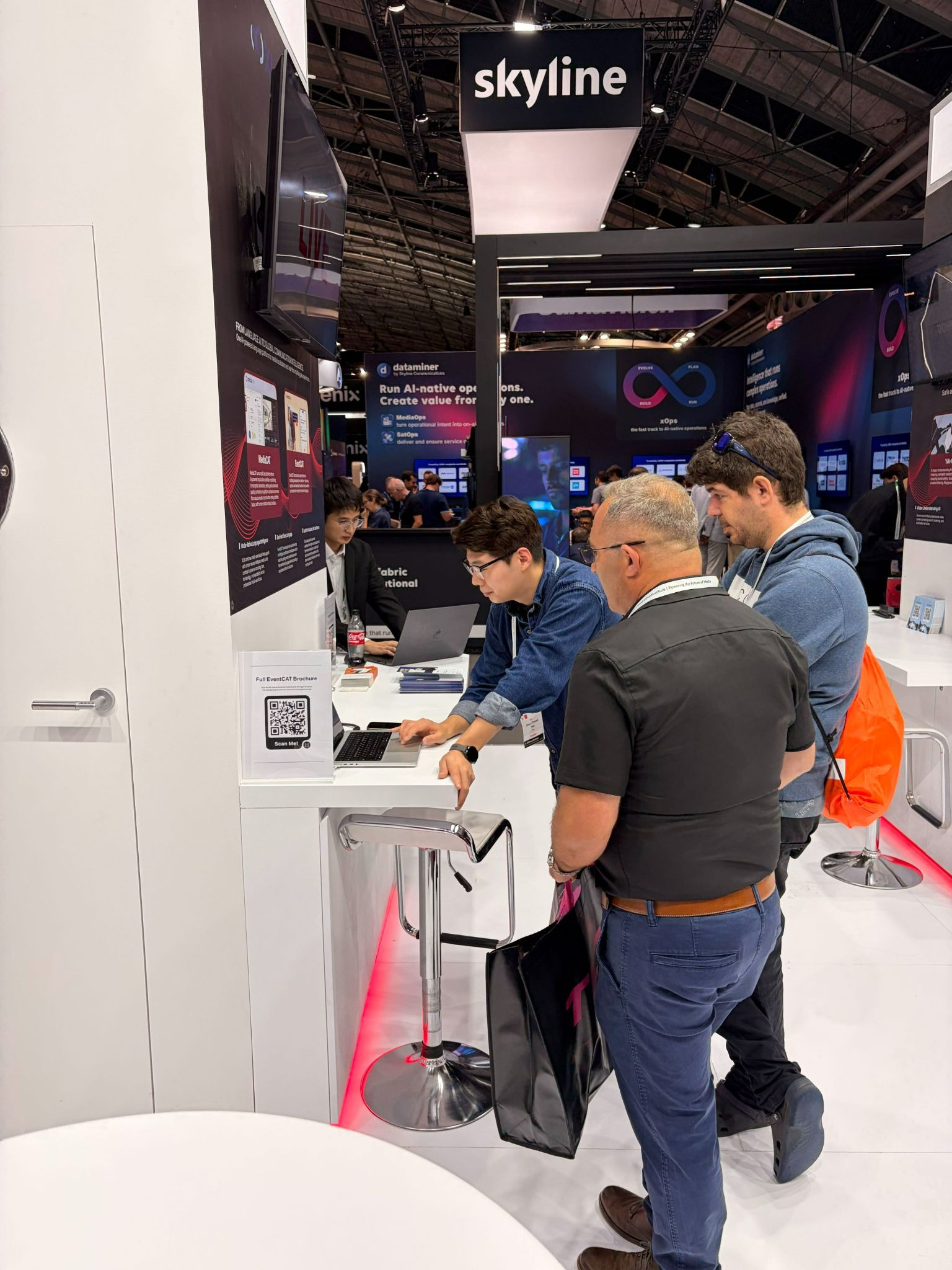
At the same time, there was a steady mix of new visitors stopping by the booth, watching a product walkthrough, and turning that demo into a conversation about their own production environment. That was one of the most useful parts of the show. Once people could see the workflow in front of them, their questions became much more specific, and so did our understanding of what mattered to them.
One of the strongest trends we observed at IBC was the growing demand for secure AI deployment. Broadcasters and studios increasingly want the benefits of AI while keeping unreleased content inside their own infrastructure.
What if the content never had to leave your environment?
That question was at the center of one of the main demos we brought to IBC: MediaCAT On-Prem. Content teams often need to start working with video while it is still in production, sometimes long before an audience will ever see it. Those raw assets can contain unreleased scenes, scripts, dialogue, and other sensitive material, which makes sending them outside the company’s own infrastructure a very different decision from processing content that is already public.
MediaCAT On-Prem is designed for that part of the workflow. Raw production files can be processed and enriched with searchable metadata, subtitle data, speech transcription, and multilingual information while remaining entirely within the customer’s own environment. The same metadata can then help editors search through large amounts of footage during production instead of manually opening files one by one.
What could that look like in practice?
Before content can be distributed, raw footage must go through a production stage where it's edited down to the final cut. But editors can't work directly with raw files. Without metadata or transcriptions, there's no way to search for specific scenes to keep or cut, so editors would have to watch the entire footage just to understand what they're working with. That's simply impractical at scale.
As a workaround, studios send this raw, unreleased footage to external vendors to have it tagged with metadata and transcribed or subtitled. But this introduces serious security risks, and it's slow.
With MediaCAT On-Prem, that raw footage never has to leave your server. Metadata, transcriptions, and translated subtitles are all added in place. The value isn't just faster processing. It's making the footage usable without ever changing where the sensitive content lives.
What if using a platform started with a question instead of a menu?
The second demo, Ops Agent, started from a completely different kind of friction. Modern platforms can do more than ever, but more functionality often means more menus, filters, dashboards, and settings for users to learn. Someone can know exactly what they want to do and still spend time figuring out where the software expects them to go.
Ops Agent is being built to change that interaction. The agent learns the platform where it is installed and allows users to make requests in plain language instead of navigating through the interface step by step.
For example, imagine someone opening the platform for the first time and needing to check which translation projects are still active. Instead of learning the menu structure and configuring filters, they could simply ask:
“Pull up all my ongoing translation projects.”
Ops Agent can find the relevant information and report it back. We debuted the concept within MediaCAT at IBC, but the larger goal is for it to remain platform-agnostic, so the same kind of natural-language interaction could eventually work across other systems as well.
Why This Matters for Media Companies
AI is no longer being evaluated as a standalone feature.
Media organizations increasingly expect AI to improve security, accelerate localization, enrich metadata, and simplify complex workflows without disrupting existing production environments.
Many of the conversations at IBC reflected exactly this shift.
The interesting part started after the demo
MediaCAT On-Prem and Ops Agent address different problems, but showing them in person led to a similar pattern. Visitors would watch the walkthrough, connect what they were seeing to their own workflow, and begin asking how it might work in their environment.
That was where the most useful conversations happened. With MediaCAT On-Prem, discussions naturally moved toward unreleased content, internal infrastructure, security, and how teams search through production material. With Ops Agent, the questions were more about usability, onboarding, and how much complexity users should really have to learn before they can get something done.
Those reactions gave us a clearer picture of where our customers see value today and also surfaced new opportunities that we want to explore further after the event.
Three Industry Shifts We Saw Taking Shape at IBC 2026
IBC 2026 was more than an opportunity to showcase new products. The conversations we had with broadcasters, studios, and media teams pointed to a broader change in how the industry is thinking about AI: not as a standalone feature, but as infrastructure that needs to fit securely and naturally into existing workflows.
1. Secure AI is moving from preference to requirement.
For teams working with unreleased content, the question is no longer simply whether AI can improve efficiency. It is whether AI can do so without forcing sensitive assets outside the company’s own environment. That demand for greater control is shaping how media organizations evaluate new technology.
2. Metadata is becoming part of the production workflow, not just an output.
As media libraries continue to grow, transcripts and subtitles are increasingly valuable not only for localization, but for helping editors, producers, and archivists find and work with content faster. Searchable, AI-generated metadata is becoming a practical way to reduce friction across the production process.
3. AI is starting to change how people interact with enterprise software.
The next shift may not be another feature added to a dashboard. It may be a different way of using the platform altogether. Natural-language interfaces can reduce the time users spend learning menus, filters, and settings, allowing them to focus instead on what they actually want to accomplish.
Together, these shifts point to a larger change: the most useful AI will not sit beside the workflow. It will become part of the workflow itself.
IBC ended, but the conversations didn’t
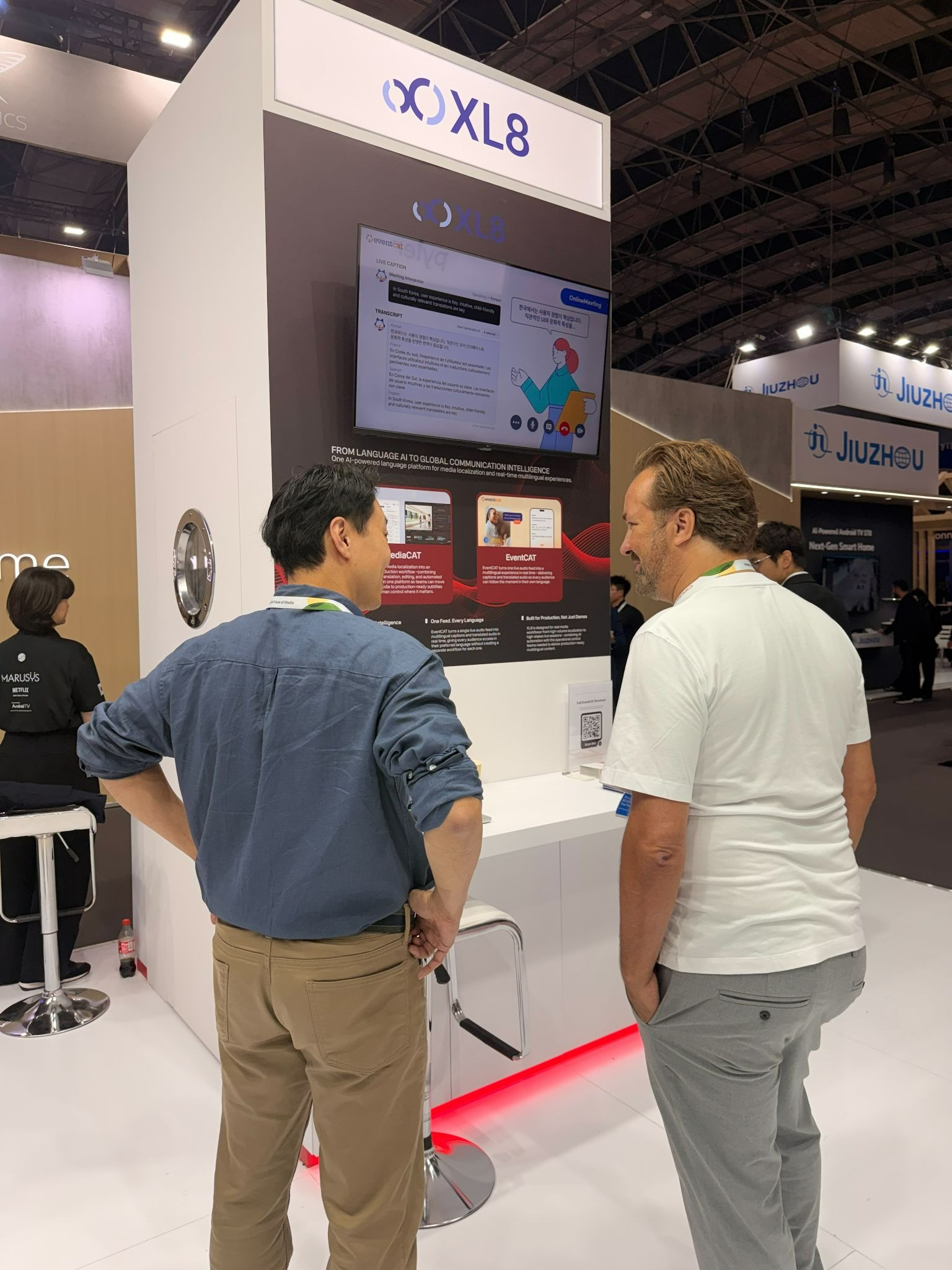
By the final day, our time at IBC had included customer catch-ups, new introductions, live product walkthroughs, and conversations with people who happened to discover XL8 on the show floor. Some already knew our products well; others were seeing them for the first time. We even closed out the event talking with students and researchers who stopped by with their own questions about what we were building.
We arrived in Amsterdam with MediaCAT On-Prem and Ops Agent to demonstrate. We left with a better understanding of how customers are thinking about security, usability, and the role AI can play inside the tools and workflows they already use.
What we showed mattered. What we heard matters even more.
That is what made IBC 2026 valuable for us: not simply putting new technology on a screen, but seeing what happened when the people who may actually use it started asking questions.
Contributors
Rosa Lee
Head of Marketing